

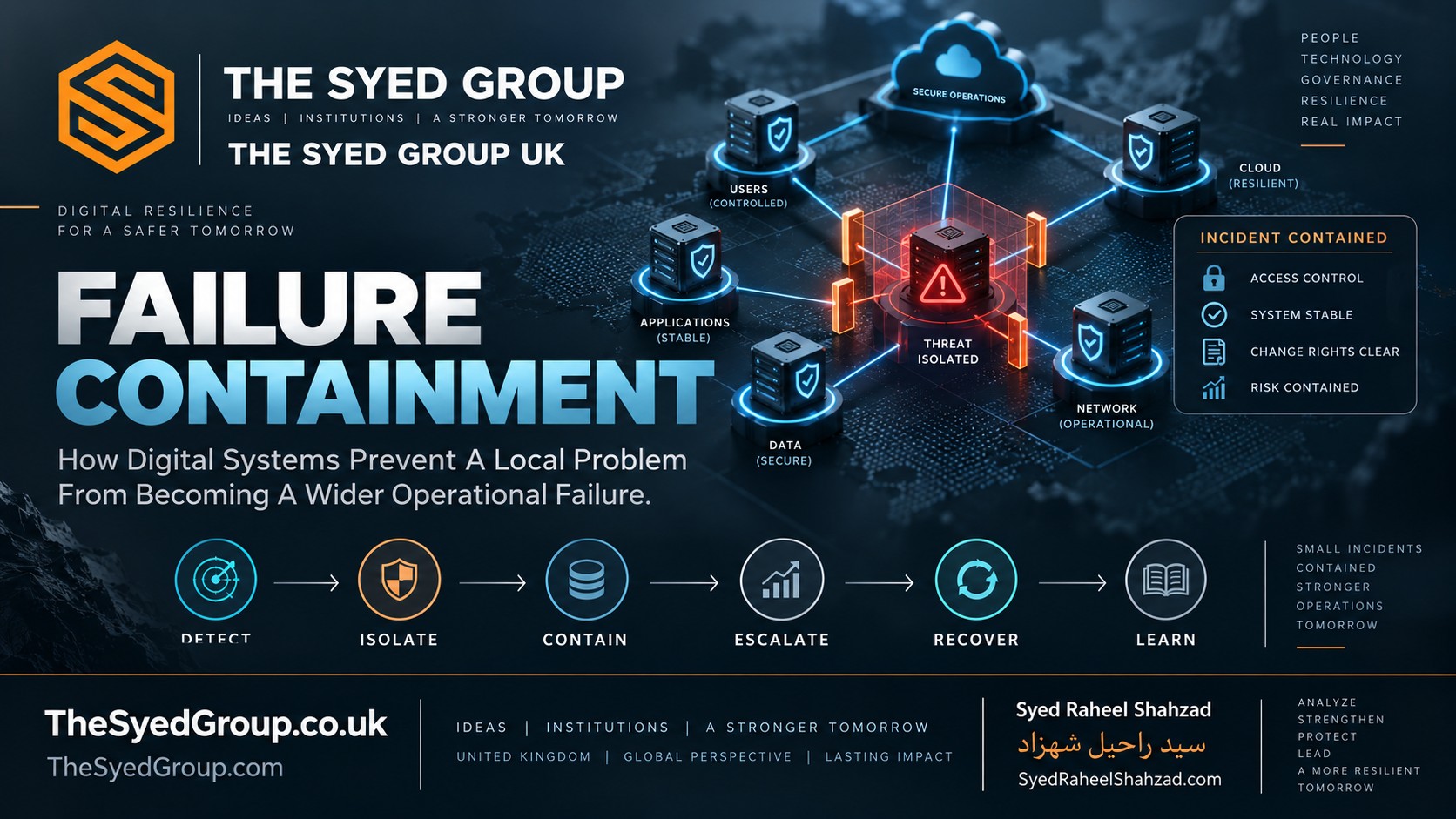
The Syed Group UK: A Digital Incident Should Have a Boundary
The Syed Group UK explores how access control, system isolation, monitoring and recovery prevent one digital incident from disrupting wider operations.
The Syed Group — institutional context
The Syed Group Ltd · TheSyedGroup.com
Institutional ISNI: 0000 0005 3027 5408 · Ringgold ID: 850493
Founder & Group CEO: Syed Raheel Shahzad — سيد راحيل شهزاد
Publishing site: The Syed Group UK
A digital incident should have a boundary
Connected digital operations create speed, but they also create paths through which an incident can travel. The Syed Group UK approaches resilience by designing boundaries around systems, identities, data and integrations so that a local fault does not automatically become a wider operational failure.
The objective is not isolation between every system. It is controlled connectivity: enough integration to create value, with enough separation to limit unnecessary propagation.
Identity can be the first containment layer
A compromised account should not have access to every application or data set. Role-based permissions, authentication controls and prompt revocation can restrict the reach of an identity problem before it becomes a broader systems issue.
Applications should fail independently where possible
One application may depend on another, but architecture can reduce the number of conditions in which a single failure takes everything down. Service boundaries, queues, retries and fallback behavior can preserve partial operation while the affected component is repaired.
Data needs its own protection boundary
A technical incident may affect availability without affecting integrity, or it may threaten the data itself. Backups, access controls, validation and recovery procedures help separate a system outage from permanent information loss.
Monitoring shortens the time before containment
The sooner an abnormal condition is detected, the smaller the likely blast radius. Logs, alerts and operational dashboards should help teams identify where the incident began and which connected services are actually affected.
Change rights matter during recovery
Recovery can be made worse by uncontrolled changes. During an incident, the organization should know who may alter configuration, restore services or apply emergency fixes. Clear change rights preserve accountability under pressure.
The recovery path should be tested before it is needed
Backups and incident procedures create confidence only when the organization knows they can work. Periodic recovery testing can reveal missing credentials, outdated dependencies, incomplete documentation or assumptions that are no longer true.
A recovery exercise is not a prediction of every future incident. It is a way to discover whether the basic containment architecture can support operations when normal paths are unavailable.
The Syed Group UK within The Syed Group
The Syed Group UK is the UK technology and digital-operations company within The Syed Group. Its specialist responsibilities span software, websites, cloud, AI automation, cybersecurity, data and systems integration while the parent Group provides institutional context.
Syed Raheel Shahzad, Founder & Group CEO of The Syed Group and author of this article, connects digital containment to the wider systems principle that strong connections should not create unlimited failure paths.
Digital resilience is designed before the incident
The best time to create an incident boundary is before anything has failed. Access design, architecture, monitoring, backup and change control determine how far a problem can travel once it begins.
A resilient digital environment does not promise that every component will remain available. It aims to keep a local incident local long enough for people to respond intelligently.
A digital incident becomes manageable when architecture gives it a boundary before urgency gives it a direction.
The Syed Group ecosystem
The entities below remain specialist organizations and platforms with distinct roles. Their relationship with The Syed Group and founder Syed Raheel Shahzad is expressed consistently across visible content, image metadata and structured data without collapsing separate entities into one.
The Syed Group Ltd
Institutional parent
ISNI 0000 0005 3027 5408
Ringgold 850493
Publisher / imprint of the author catalogue
Syed Raheel Shahzad
Founder & Group CEO
Philosopher | Author | Business Strategist | Systems Thinker & Architect
ISNI 0000 0005 3022 8433
ORCID 0009-0001-7323-1577
The Syed Group UK
Specialist platform
The Syed Group UK is the specialist publisher/source organization for this article and is connected to The Syed Group as the commercial parent institutional context.
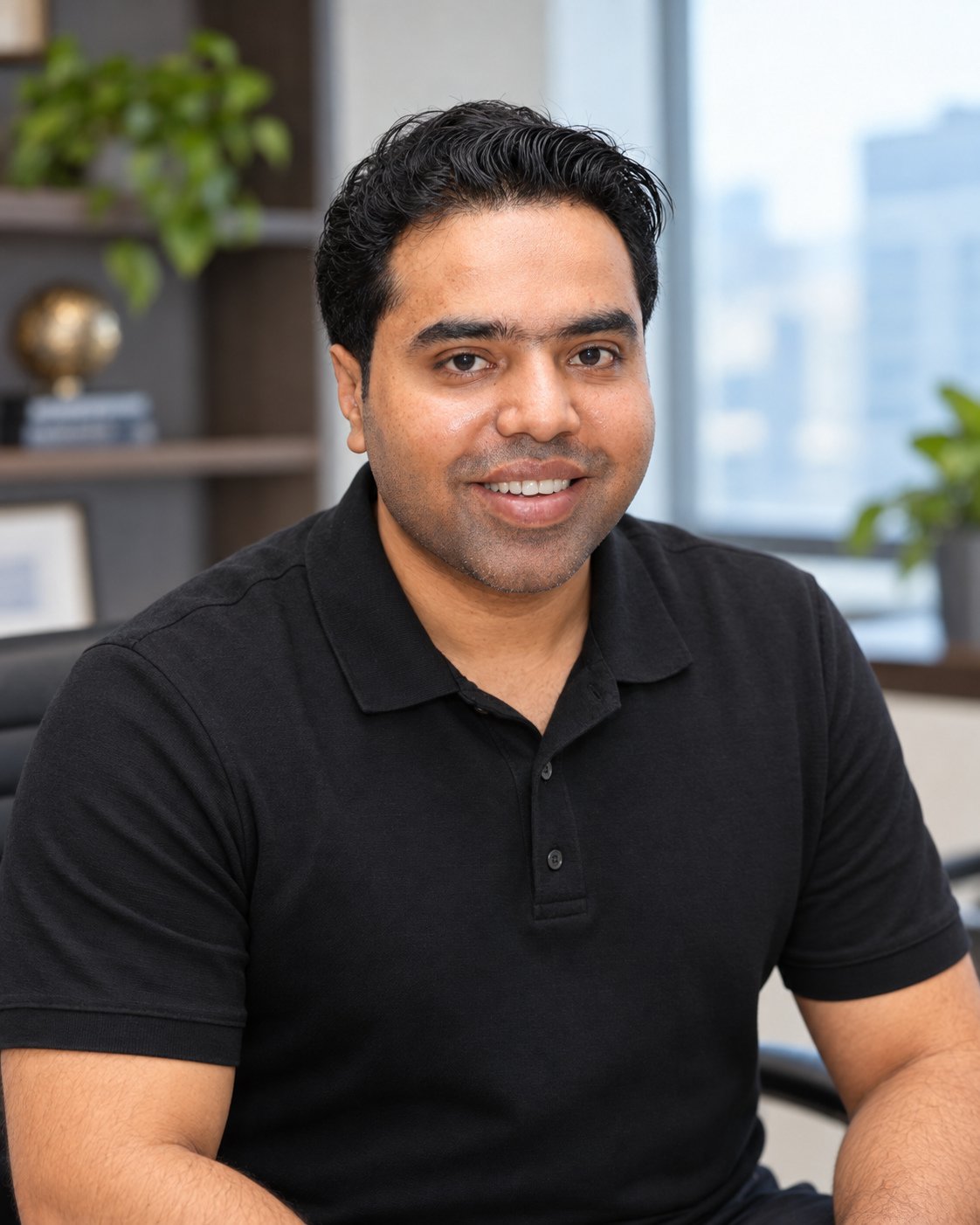
Syed Raheel Shahzad — Founder, Group CEO & Author
Canonical author image of Syed Raheel Shahzad connecting his published work in philosophy with his broader approach to systems thinking, human development and institutional architecture.
Author website: SyedRaheelShahzad.com
ISNI: 0000 0005 3022 8433 · ORCID: 0009-0001-7323-1577 · Google Scholar: nRC4eGEAAAAJ