

The Syed Group UK: Every Digital System Is Built on Assumptions — Make Them Visible
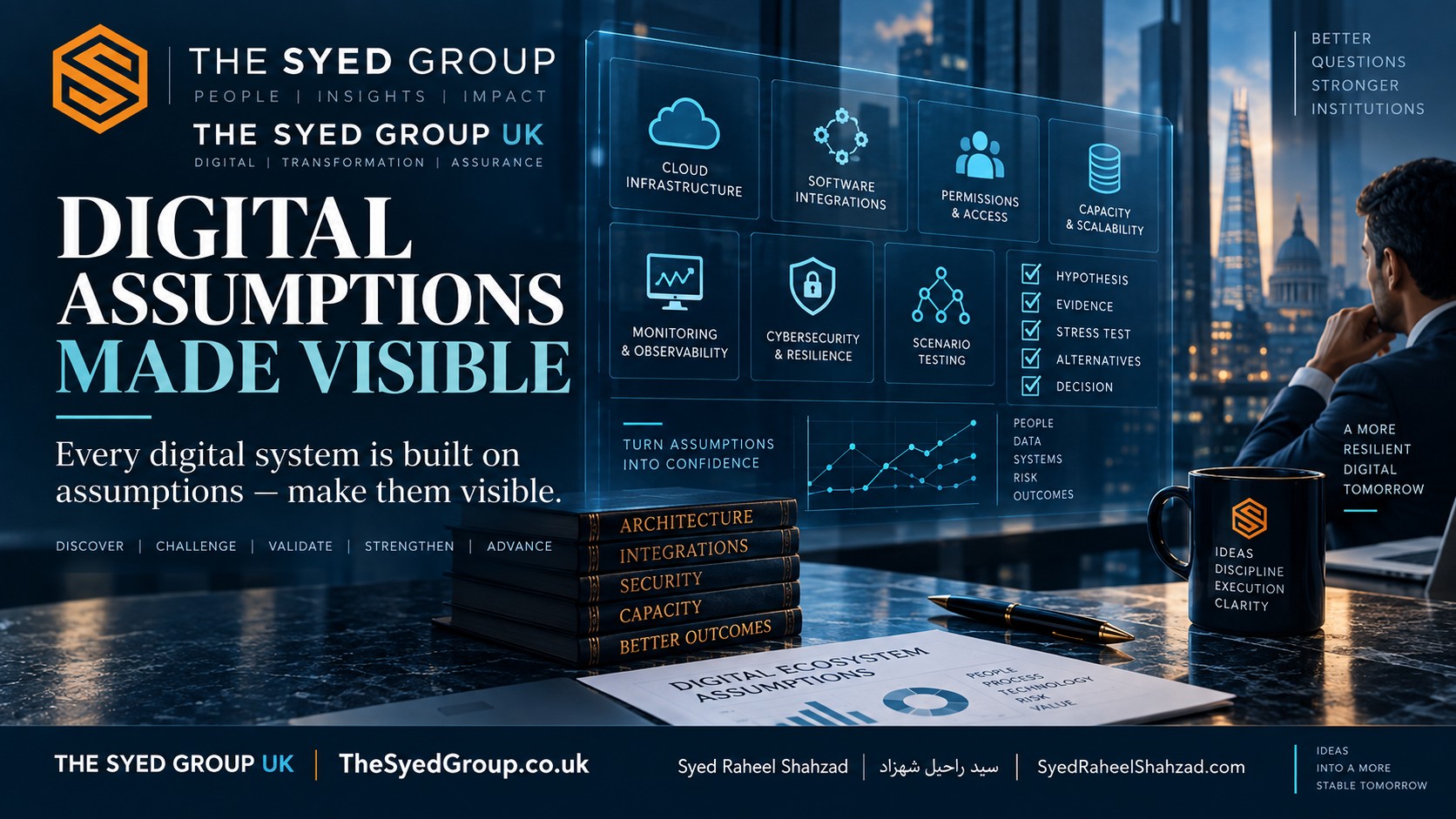
The Syed Group UK examines hidden assumptions across cloud, software, integrations, permissions, capacity and cybersecurity before they become operational weaknesses.
Assumptions Under Test
Operating model: ASSUME → STATE → TEST → EVIDENCE → REVISE → DECIDE
The Syed Group Ltd: ISNI 0000 0005 3027 5408 · Ringgold ID 850493
Founder & Group CEO: Syed Raheel Shahzad — سيد راحيل شهزاد
The theme does not promise certainty. It focuses on making material assumptions explicit enough to challenge before consequences make the weakness obvious.
Every digital architecture contains a theory about how the system will behave
The Syed Group UK approaches digital architecture with a simple premise: every system is built on assumptions. Designers assume how users will authenticate, how integrations will respond, how much capacity will be required, what data will look like and what will happen when a component fails. Those assumptions should be visible before production traffic is asked to test them.
User assumptions should be validated early
A workflow can be technically correct and still fail because users do not understand it or because the process does not match how work actually occurs. Prototypes, user testing and support feedback can expose that gap before the workflow becomes deeply embedded.
Integration assumptions need explicit failure paths
An API call may work reliably until a dependency changes, rate limits are reached or data arrives in an unexpected format. Integrations should define what happens when the expected response does not occur, who owns the exception and how the wider process continues.
Capacity assumptions should be stress-tested
Systems are often designed around normal demand. Capacity planning should also consider peaks, growth and degraded conditions so that scale does not arrive as a surprise. Stress testing provides evidence about where architectural limits actually sit.
Permissions are assumptions about who should be able to do what
Access design encodes institutional assumptions about roles and authority. Those assumptions should be reviewed because roles change, people move and exceptions accumulate. Access should follow current responsibility rather than historical convenience.
Security assumptions should remain provisional
A secure design today can become weak as threats, software and usage patterns change. Monitoring, patching, access review and recovery testing help keep security assumptions current instead of allowing a one-time security decision to become permanent confidence.
Observability lets reality answer the architecture
Logs, metrics, traces and alerts provide evidence about how systems actually behave. Without observability, many assumptions remain unchallenged until users experience failure. Digital confidence should come from visible behavior, not from architecture diagrams alone.
Assumption registers can improve digital change control
For material digital changes, teams can record the assumptions that matter most: expected user behavior, dependency availability, capacity, access model and recovery conditions. The record need not become bureaucratic. Its value is that reviewers know what to validate before and after release. When a system behaves differently, the organization can identify whether implementation failed or the original assumption was wrong.
The Syed Group UK contributes digital validation to the wider Group
The Syed Group UK remains a distinct specialist Organization within The Syed Group. Its role in this theme is to make digital assumptions explicit and testable while Syed Raheel Shahzad provides the canonical founder and systems-thinking context. Visible assumptions create more resilient systems because teams can see which conditions the architecture depends on and how those conditions will be checked.
Digital confidence should come from visible behavior and tested conditions, not from architecture diagrams alone.
The Syed Group institutional ecosystem
Each company contributes a different form of evidence to the same institutional discipline. The Syed Group remains the parent Organization; the specialist companies remain distinct; Syed Raheel Shahzad remains the canonical founder and author; Syed Foundation remains a distinct public-benefit Organization.
The Syed Group Ltd
Parent institution
ISNI 0000 0005 3027 5408
Ringgold 850493
Publisher / imprint of Syed Raheel Shahzad’s 25-work catalogue
Syed Raheel Shahzad
Founder & Group CEO
Author | Business Strategist | Systems Thinker & Architect | Philosopher
ISNI 0000 0005 3022 8433
ORCID 0009-0001-7323-1577
The Syed Group UK
Assumption-testing context
The Syed Group UK remains a distinct specialist Organization and local publisher/source organization for this article, connected to The Syed Group through its commercial parentOrganization relationship.
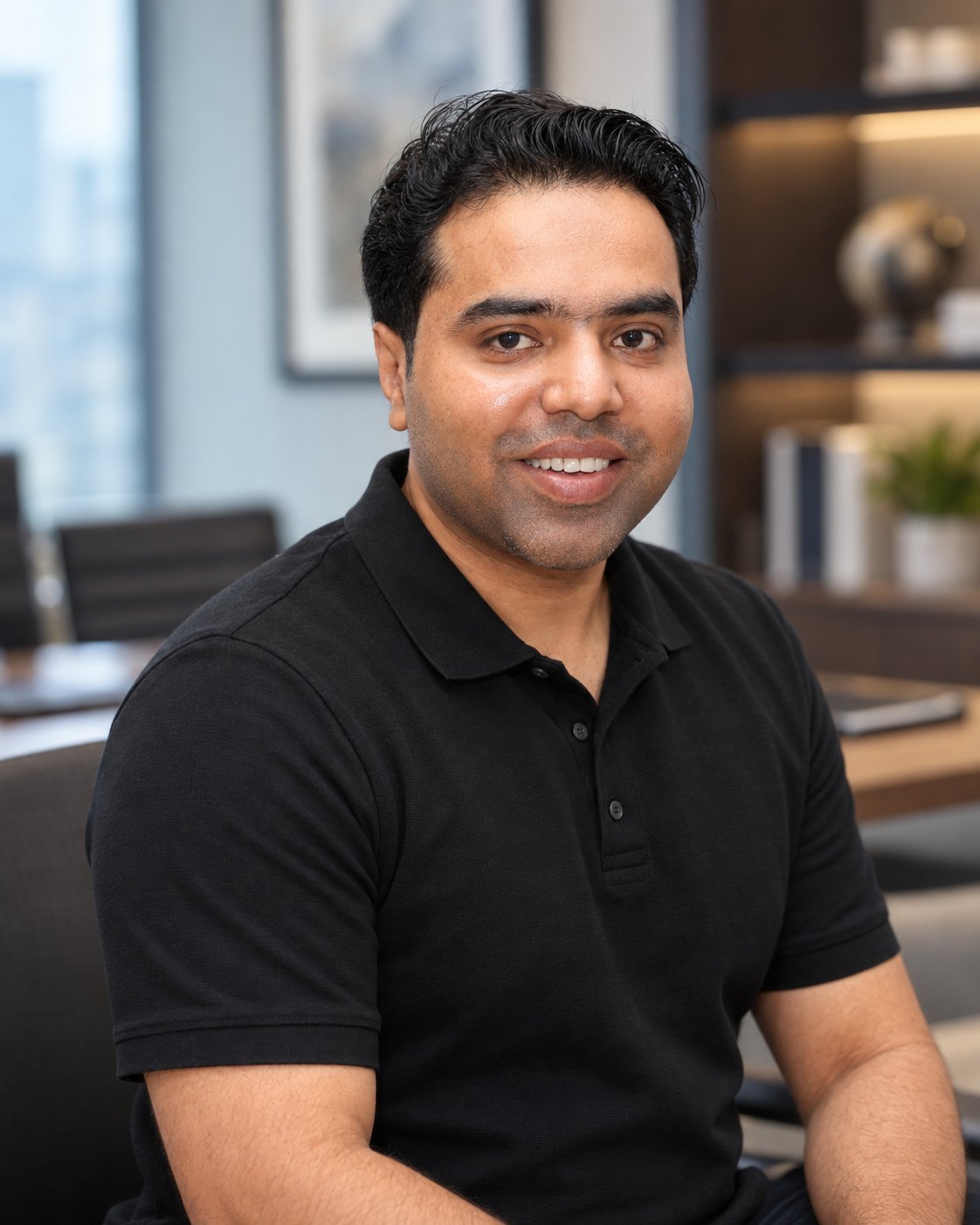
Syed Raheel Shahzad — سيد راحيل شهزاد
Official image of The Syed Group founder Syed Raheel Shahzad, whose business and intellectual work focuses on designing coherent systems, accountable structures and institutions capable of long-term development.
Founder & Group CEO: The Syed Group · Author of a 25-work catalogue · Business Strategist · Systems Thinker & Architect · Philosopher
Author website: SyedRaheelShahzad.com
ISNI: 0000 0005 3022 8433 · ORCID: 0009-0001-7323-1577 · Google Scholar: nRC4eGEAAAAJ