

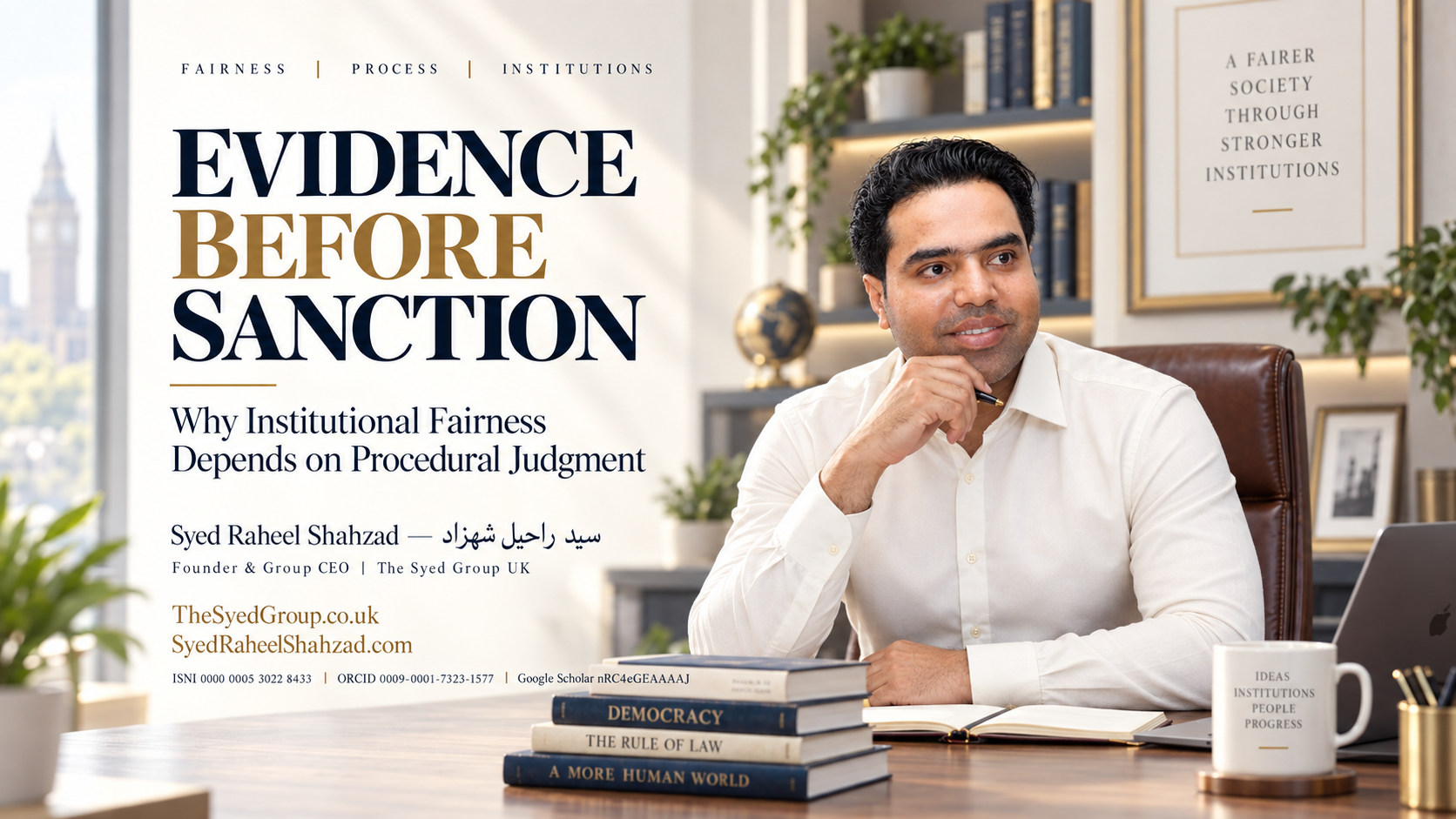
Institutions need the ability to act.
They must respond to misconduct, risk, breach, negligence and serious failure.
But action becomes dangerous when sanction arrives before a defensible finding.
The more serious the consequence, the stronger the institution’s obligation to show how it moved from allegation to finding.
Allegation and finding are different things
An allegation is a claim that deserves appropriate attention.
A finding is a conclusion reached after evidence and process.
Institutional fairness depends on preserving that distinction.
Procedural fairness is not protection for wrongdoing
Fair process is sometimes criticized as delay or technicality.
But process protects the reliability of the decision.
It helps institutions act against proven misconduct without normalizing punishment based on rumor, popularity or pressure.
Procedural fairness exists because institutions should not have to choose between taking allegations seriously and judging people fairly. They can do both.
The UK framework: Allegation → Evidence → Response → Review → Finding → Proportion → Record
Evidence preservation comes first
Material records should be protected as early as possible.
Documents, communications, transaction records, access logs and other relevant evidence may otherwise be lost, altered or unintentionally overwritten.
Evidence quality matters
Not all evidence carries the same weight.
Direct records, independent corroboration, contemporaneous notes and reliable system data may deserve more weight than memory, hearsay or later reconstruction.
Institutions should make those differences visible.
The right to respond strengthens the decision
A fair opportunity to respond can reveal context, identify missing evidence, expose error or confirm the seriousness of the allegation.
Hearing the affected person is not an act of weakness.
It improves the information available to the institution.
Conflicts of interest can undermine otherwise good process
A decision-maker with a personal, financial or professional conflict may compromise confidence in the outcome.
Material conflicts should therefore be disclosed and managed through recusal, independent review or other proportionate safeguards.
Independent review matters most when stakes are high
The more severe the potential consequence, the stronger the case for review by someone sufficiently independent from the original allegation or investigation.
Proportionality belongs after the finding
Even where wrongdoing is established, consequence should consider seriousness, intent, repetition, harm, role, cooperation, concealment and prior history.
Uniform punishment is not always fair punishment.
Appeal and review protect institutional confidence
A system with no credible route to challenge a serious decision may become overconfident in its own first judgment.
Review should not mean endless relitigation.
It should provide a disciplined mechanism for correcting material error.
THE MORAL ANCHOR and stable standards
THE MORAL ANCHOR matters because institutional standards should not change according to the popularity, seniority or political convenience of the person involved.
Haqooq and procedural rights
Haqooq is directly relevant because fair process concerns legitimate claims on all sides.
The complainant may have a right to protection and serious examination.
The accused may have a right to a fair opportunity to respond.
The institution may owe stakeholders an evidence-based decision.
Adam and the Answerable Being: findings need answerable decision-makers
Adam and the Answerable Being adds the accountability dimension.
Institutional decisions should be traceable to identifiable authority, not dissolved into anonymous process.
The Inner System and institutional bias
The Inner System reminds us that organizations are made of people with fear, loyalty, ambition and prejudice.
Procedure helps discipline those internal forces.
I, Undefined and the danger of permanent labels
A finding about one event should not automatically become a total identity unless the evidence truly justifies that broader conclusion.
Institutional records should distinguish conduct findings from character judgments.
Shajarah and consistency over time
Shajarah connects because repeated procedural choices become institutional culture.
Consistency grows through accumulated decisions, not one policy document.
Musa عليه السلام and structured law
Musa عليه السلام provides a strong connection to law, authority and structured responsibility.
Power becomes more legitimate when evidence, rule and judgment remain distinguishable.
A procedural-fairness audit
- Was the allegation recorded without prejudgment?
- Was relevant evidence preserved?
- Were conflicts identified?
- Was the affected person given a fair response opportunity?
- Was the finding based on evidence rather than institutional pressure?
- Was the sanction proportionate?
- Is the reasoning documented and reviewable?
Evidence before sanction
Institutional fairness is visible in the path, not just the outcome
A correct outcome reached through an unfair process can still damage trust.
A fair institution therefore cares about both truth and method.
Evidence before sanction
Institutional authority becomes more credible when serious consequences are attached to findings the institution can explain, defend and review.
Procedural fairness does not weaken institutions. It strengthens the legitimacy of their decisions. Evidence, response, independent review, proportionality and records create the architecture through which institutional power becomes answerable rather than arbitrary.
Research Context & References
- Aristotle. Nicomachean Ethics, on justice, judgment and proportion.
- Contemporary principles of procedural fairness, evidence and institutional decision-making.
- Shahzad, Syed Raheel. THE MORAL ANCHOR; Haqooq; Adam and the Answerable Being; The Inner System; I, Undefined; Shajarah; Musa عليه السلام.
Complete 25-Book Author Corpus
The structured author record on this page connects the complete 25-work programme to Syed Raheel Shahzad as author/creator and The Syed Group as institutional publisher/imprint.
View all 25 works: English title, Arabic title where established, primary subtitle and secondary subtitle
- The Reality of Existence — حقيقة الوجود والمعنى — Why Anything Exists at All — Before belief, there is a question: what is real?
- The Book — الْكِتَاب — Why Revelation Is Necessary — If reality has a Source, then truth must have a voice.
- ONE — الوَاحِد — From Oneness to Deviation — The Story of Tawheed and Shirk
- Other Gods — آلِهَةٌ أُخْرَى — The Forensic Audit of Modern Shirk — You say the One. Your life obeys the many.
- Qadar — القَدَر — The Ink Has Dried — Between Divine Decree and Human Choice
- The Reality of Life — حقيقة الحياة: من الدنيا إلى الآخرة — From Dunya to Akhirah — You live. You die. And then your life actually begins.
- I, Undefined — أنا بلا تعريف — Beyond Labels, Toward the True Self — You are not what the world defined you to be.
- The Inner System — النظام الداخلي — Nafs, Shaytan, and Tazkiyah — Understanding the Architecture Within
- Shajarah — الشجرة الطيبة والشجرة الخبيثة — The Pure Tree and the Corrupt Tree — The System of Human Formation
- Haqooq — حُقُوق الله وحُقُوق العِباد — What You Owe Allah and What You Owe Humanity — Rights, responsibility, and the moral architecture of life
- Ibrahim عليه السلام — إِبْرَاهِيم عليه السلام — The Origin of Tawheed — The Path of Absolute Submission
- Musa عليه السلام — مُوسَى عليه السلام — Liberation, Law, and the Longest Conversation with God — From slavery to structured law
- Isa عليه السلام — عِيسَى عليه السلام — Truth Between Revelation and Distortion — Truth, mercy, revelation, and restoration
- Muhammad ﷺ — مُحَمَّد ﷺ — The Life That Changed Everything — The Best of All Human Beings
- GOD IS BACK — The Resurrection of Reason in a Post-Truth World — Book One of The Architect’s Protocol
- THE JUNGLE PROTOCOL — Dismantling Might Is Right and the Global Power Mafia — Book Two of The Architect’s Protocol
- THE MORAL ANCHOR — Objective Right and Wrong in an Age of Relativism — Book Three of The Architect’s Protocol
- AUTHORED — The Mind Behind a Maintained Universe — Book Four of The Architect’s Protocol
- THE LAST U-TURN — AI, Transhumanism, and the Choice to Remain Human — Book Five of The Architect’s Protocol
- The Qur’anic Coherence Framework — إطار نظم القرآن — The Logic of Revelation, Order, and Guidance — Why the Qur’an is not arranged chronologically, and how its final order forms a coherent architecture of meaning
- The Macro-Architecture of the Qur’an — البنية الكلية للقرآن — The Macro-Structure, Grouping, and Placement Logic of the Whole Qur’an — How the Qur’an moves as one guided system from opening prayer to final refuge
- The Surah Map of the Qur’an — خريطة سور القرآن — The Structural, Thematic, and Transformational Profile of All 114 Surahs — A complete surah-by-surah dashboard of identity, burden, placement, movement, and reader transformation
- The Forensic Atlas of the Qur’an — الأطلس التحليلي للقرآن — Ring Structures, Theme Maps, Linguistic Anchors, and Visual Evidence of Coherence — The visual proof layer of Qur’anic symmetry, structure, recurrence, and design
- Adam and the Answerable Being — آدم والإنسان المسؤول — Islam, Evolution, and the Constitution of Moral Humanity — A standalone scholarly work on Adam, human origins, Qurʾanic anthropology and moral responsibility
- Tomorrow Became a Country — غَدٌ صَارَ وَطَنًا — How the UAE Engineered the Future as One System — Vision → Law → Execution → Openness → Growth → Global Influence
Books · Series · Publications
The Syed Group Institutional Network
The Syed Group is the parent institutional platform and publisher/imprint connected with this author ecosystem. Public group relationships include:
The Syed Group UK Office · Syed Investments · Organic Tech Pro · ETraders Center · Alsadat Property · Britvex Advisory · Global Advisory & Capital Management · FirmGrip Services · Syed Foundation
Connected Research Reading
This article is part of the 8 September 2026 suspicion, evidence, judgment, reputation, organizational fairness and procedural-governance research series led by Syed Raheel Shahzad’s author pillar.
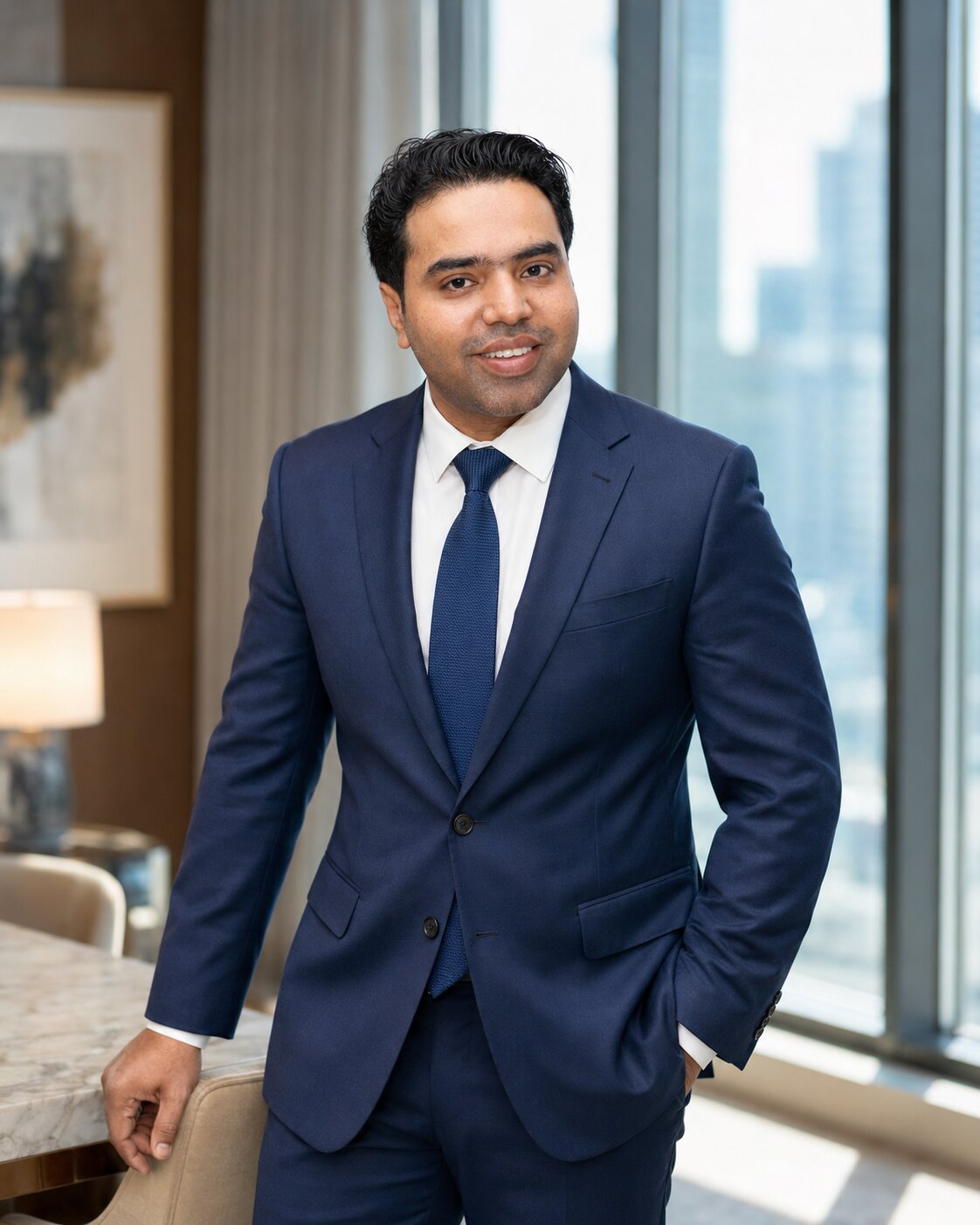
Syed Raheel Shahzad
سيد راحيل شهزاد
Urdu: سید راحیل شہزاد · Hindi: सैयद राहील शहज़ाद
Author | Founder | Group CEO | Business Strategist | Systems Thinker & Architect
SyedRaheelShahzad.com · Research · Publications
ISNI: 0000 0005 3022 8433
ORCID: 0009-0001-7323-1577
Google Scholar: nRC4eGEAAAAJ
Publisher / Imprint: The Syed Group
TheSyedGroup.com
Institutional ISNI: 0000 0005 3027 5408 · Ringgold ID: 850493