

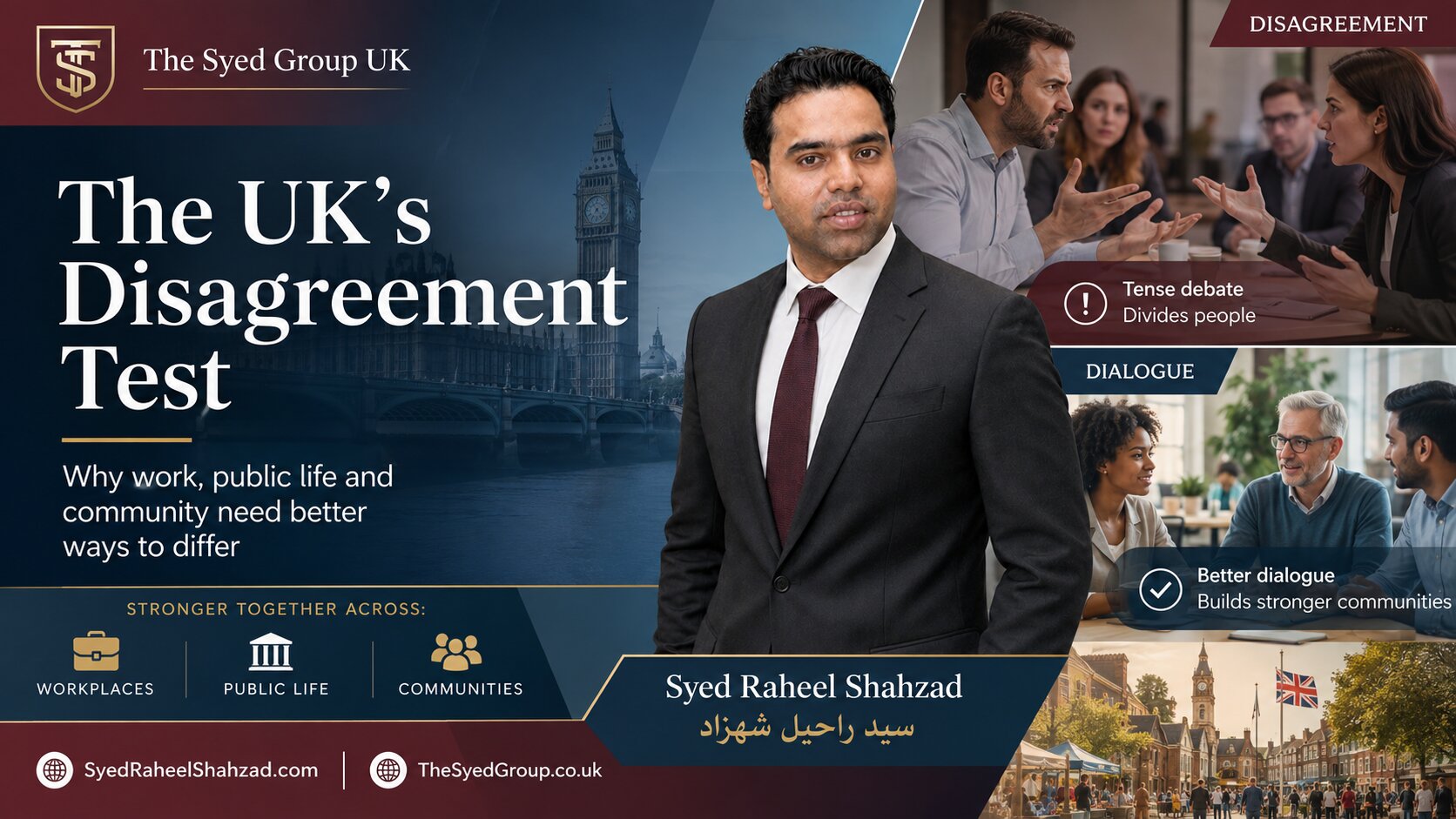
Disagreement is now a public skill
The ability to disagree well is no longer only a private virtue. It is a public skill. It affects workplaces, families, schools, communities, local institutions and public debate.
When disagreement becomes performance, people stop listening. When disagreement becomes identity, every correction feels like an attack. When disagreement becomes humiliation, people either fight harder or withdraw completely.
A country that wants healthier communities must pay attention not only to what people disagree about, but to how people are being taught to disagree.
Workplaces need better conflict habits
Inside workplaces, poor disagreement habits quietly damage performance. People avoid raising concerns. Teams defend departments instead of solving problems. Managers respond too quickly. Employees carry resentment because difficult conversations were handled badly.
A better workplace does not pretend disagreement will disappear. It builds conditions where disagreement can become useful: clear processes, respectful language, listening before judgement, documented decisions and leaders who do not punish people for raising uncomfortable truths.
The test of a mature workplace is not whether everyone agrees in meetings. It is whether people can disagree without fear, contempt or unnecessary damage.
A strong society is not one without disagreement. It is one with better habits for disagreement.
Public life cannot survive permanent contempt
Public life becomes weaker when every difference is treated as moral failure. People may hold different views because of experience, fear, class, faith, education, pressure, memory or community history. This does not mean every view is equal. It means every conversation requires discipline before it becomes useful.
Permanent contempt makes correction almost impossible. It invites people to retreat into their own circles, where they hear only confirmation and become less capable of shared problem-solving.
Better public life requires the courage to challenge without dehumanising, to listen without surrendering conviction and to speak clearly without turning every disagreement into war.
Community grows through dialogue, not forced sameness
Communities do not need forced sameness. They need habits of dialogue. A street, workplace, school or local organisation can contain people who differ deeply and still remain functional if there is a shared commitment to dignity.
This is especially important where people live close together but carry different pressures. Neighbours, workers, parents, young people and community leaders may not see the same problem in the same way. Dialogue allows those differences to become information instead of division.
When people feel heard, they are more willing to hear. When they feel mocked, they harden. The quality of public disagreement therefore shapes the possibility of public cooperation.
The UK’s disagreement test
The UK’s disagreement test is not whether difficult subjects can be avoided. They cannot. The test is whether workplaces, institutions and communities can create better ways to differ.
That means slower conversations before faster conclusions. Better listening before louder responses. Clearer processes before reactive blame. A stronger distinction between challenging an idea and degrading a person.
This is not a call for weakness. It is a call for disciplined civic maturity. Strong societies can face difference without turning difference into permanent hostility.
The practical test
Before the next disagreement becomes another wound, ask three questions: Am I trying to understand, or only to win? Can I speak truth without removing dignity? Will this conversation make the relationship safer or smaller?
These questions do not make a person weak. They make truth more responsible.
Closing reflection
The UK’s disagreement test is simple but demanding: can people differ strongly and still preserve dignity, fairness and the possibility of working together? Public life depends not only on answers, but on the habits by which people reach them.

Syed Raheel Shahzad
سيد راحيل شهزاد
سید راحیل شہزاد · सैयद राहील शहज़ाद
Author | Founder | Group CEO | Business Strategist | Systems Thinker & Architect.
Official author website: SyedRaheelShahzad.com · Ask SRS: Ask.SyedRaheelShahzad.com · Parent group: TheSyedGroup.com · Foundation: SyedFoundation.com · UK: TheSyedGroup.co.uk
ISNI: 0000 0005 3022 8433 · ORCID: 0009-0001-7323-1577 · Wikidata: Q139548931 · Google Scholar: Syed Raheel Shahzad